
Showing metabocard for 3-Hydroxyanthranilic acid (BMDB0001476)
| Record Information | ||||||||||||||||||||||||||||||||||||||||||||||||||||||||||
|---|---|---|---|---|---|---|---|---|---|---|---|---|---|---|---|---|---|---|---|---|---|---|---|---|---|---|---|---|---|---|---|---|---|---|---|---|---|---|---|---|---|---|---|---|---|---|---|---|---|---|---|---|---|---|---|---|---|---|
| Version | 1.0 | |||||||||||||||||||||||||||||||||||||||||||||||||||||||||
| Creation Date | 2016-09-30 22:46:30 UTC | |||||||||||||||||||||||||||||||||||||||||||||||||||||||||
| Update Date | 2020-05-21 16:28:50 UTC | |||||||||||||||||||||||||||||||||||||||||||||||||||||||||
| BMDB ID | BMDB0001476 | |||||||||||||||||||||||||||||||||||||||||||||||||||||||||
| Secondary Accession Numbers |
| |||||||||||||||||||||||||||||||||||||||||||||||||||||||||
| Metabolite Identification | ||||||||||||||||||||||||||||||||||||||||||||||||||||||||||
| Common Name | 3-Hydroxyanthranilic acid | |||||||||||||||||||||||||||||||||||||||||||||||||||||||||
| Description | 3-Hydroxyanthranilic acid, also known as 2-amino-3-hydroxy-benzoate or 3-ohaa, belongs to the class of organic compounds known as hydroxybenzoic acid derivatives. Hydroxybenzoic acid derivatives are compounds containing a hydroxybenzoic acid (or a derivative), which is a benzene ring bearing a carboxyl and a hydroxyl groups. 3-Hydroxyanthranilic acid is a strong basic compound (based on its pKa). 3-Hydroxyanthranilic acid exists in all living species, ranging from bacteria to humans. | |||||||||||||||||||||||||||||||||||||||||||||||||||||||||
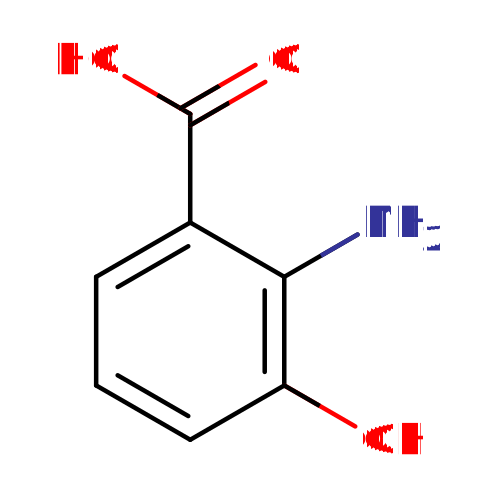
| Structure | 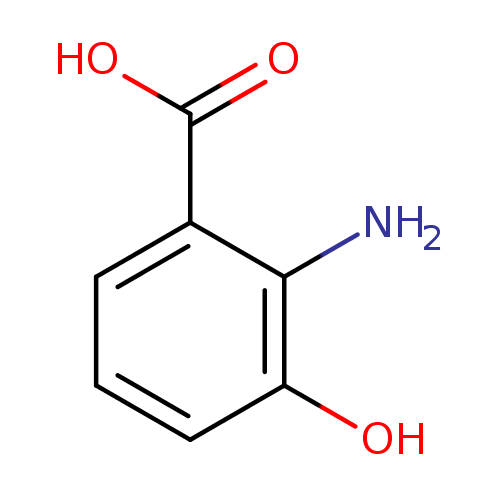 | |||||||||||||||||||||||||||||||||||||||||||||||||||||||||
| Synonyms |
| |||||||||||||||||||||||||||||||||||||||||||||||||||||||||
| Chemical Formula | C7H7NO3 | |||||||||||||||||||||||||||||||||||||||||||||||||||||||||
| Average Molecular Weight | 153.1354 | |||||||||||||||||||||||||||||||||||||||||||||||||||||||||
| Monoisotopic Molecular Weight | 153.042593095 | |||||||||||||||||||||||||||||||||||||||||||||||||||||||||
| IUPAC Name | 2-amino-3-hydroxybenzoic acid | |||||||||||||||||||||||||||||||||||||||||||||||||||||||||
| Traditional Name | 3-hydroxyanthranilic acid | |||||||||||||||||||||||||||||||||||||||||||||||||||||||||
| CAS Registry Number | 548-93-6 | |||||||||||||||||||||||||||||||||||||||||||||||||||||||||
| SMILES | NC1=C(O)C=CC=C1C(O)=O | |||||||||||||||||||||||||||||||||||||||||||||||||||||||||
| InChI Identifier | InChI=1S/C7H7NO3/c8-6-4(7(10)11)2-1-3-5(6)9/h1-3,9H,8H2,(H,10,11) | |||||||||||||||||||||||||||||||||||||||||||||||||||||||||
| InChI Key | WJXSWCUQABXPFS-UHFFFAOYSA-N | |||||||||||||||||||||||||||||||||||||||||||||||||||||||||
| Chemical Taxonomy | ||||||||||||||||||||||||||||||||||||||||||||||||||||||||||
| Description | belongs to the class of organic compounds known as hydroxybenzoic acid derivatives. Hydroxybenzoic acid derivatives are compounds containing a hydroxybenzoic acid (or a derivative), which is a benzene ring bearing a carboxyl and a hydroxyl groups. | |||||||||||||||||||||||||||||||||||||||||||||||||||||||||
| Kingdom | Organic compounds | |||||||||||||||||||||||||||||||||||||||||||||||||||||||||
| Super Class | Benzenoids | |||||||||||||||||||||||||||||||||||||||||||||||||||||||||
| Class | Benzene and substituted derivatives | |||||||||||||||||||||||||||||||||||||||||||||||||||||||||
| Sub Class | Benzoic acids and derivatives | |||||||||||||||||||||||||||||||||||||||||||||||||||||||||
| Direct Parent | Hydroxybenzoic acid derivatives | |||||||||||||||||||||||||||||||||||||||||||||||||||||||||
| Alternative Parents |
| |||||||||||||||||||||||||||||||||||||||||||||||||||||||||
| Substituents |
| |||||||||||||||||||||||||||||||||||||||||||||||||||||||||
| Molecular Framework | Aromatic homomonocyclic compounds | |||||||||||||||||||||||||||||||||||||||||||||||||||||||||
| External Descriptors |
| |||||||||||||||||||||||||||||||||||||||||||||||||||||||||
| Ontology | ||||||||||||||||||||||||||||||||||||||||||||||||||||||||||
| Status | Detected but not Quantified | |||||||||||||||||||||||||||||||||||||||||||||||||||||||||
| Origin |
| |||||||||||||||||||||||||||||||||||||||||||||||||||||||||
| Biofunction | Not Available | |||||||||||||||||||||||||||||||||||||||||||||||||||||||||
| Application | Not Available | |||||||||||||||||||||||||||||||||||||||||||||||||||||||||
| Cellular locations |
| |||||||||||||||||||||||||||||||||||||||||||||||||||||||||
| Physical Properties | ||||||||||||||||||||||||||||||||||||||||||||||||||||||||||
| State | Solid | |||||||||||||||||||||||||||||||||||||||||||||||||||||||||
| Experimental Properties |
| |||||||||||||||||||||||||||||||||||||||||||||||||||||||||
| Predicted Properties |
| |||||||||||||||||||||||||||||||||||||||||||||||||||||||||
| Spectra | ||||||||||||||||||||||||||||||||||||||||||||||||||||||||||
| Spectra | ||||||||||||||||||||||||||||||||||||||||||||||||||||||||||
| Biological Properties | ||||||||||||||||||||||||||||||||||||||||||||||||||||||||||
| Cellular Locations |
| |||||||||||||||||||||||||||||||||||||||||||||||||||||||||
| Biospecimen Locations |
| |||||||||||||||||||||||||||||||||||||||||||||||||||||||||
| Pathways |
| |||||||||||||||||||||||||||||||||||||||||||||||||||||||||
| Normal Concentrations | ||||||||||||||||||||||||||||||||||||||||||||||||||||||||||
| ||||||||||||||||||||||||||||||||||||||||||||||||||||||||||
| Abnormal Concentrations | ||||||||||||||||||||||||||||||||||||||||||||||||||||||||||
| Not Available | ||||||||||||||||||||||||||||||||||||||||||||||||||||||||||
| External Links | ||||||||||||||||||||||||||||||||||||||||||||||||||||||||||
| HMDB ID | HMDB0001476 | |||||||||||||||||||||||||||||||||||||||||||||||||||||||||
| DrugBank ID | DB03644 | |||||||||||||||||||||||||||||||||||||||||||||||||||||||||
| Phenol Explorer Compound ID | Not Available | |||||||||||||||||||||||||||||||||||||||||||||||||||||||||
| FooDB ID | FDB010582 | |||||||||||||||||||||||||||||||||||||||||||||||||||||||||
| KNApSAcK ID | C00007568 | |||||||||||||||||||||||||||||||||||||||||||||||||||||||||
| Chemspider ID | 84 | |||||||||||||||||||||||||||||||||||||||||||||||||||||||||
| KEGG Compound ID | C00632 | |||||||||||||||||||||||||||||||||||||||||||||||||||||||||
| BioCyc ID | 3-HYDROXY-ANTHRANILATE | |||||||||||||||||||||||||||||||||||||||||||||||||||||||||
| BiGG ID | 1485273 | |||||||||||||||||||||||||||||||||||||||||||||||||||||||||
| Wikipedia Link | 3-hydroxyanthranilic_acid | |||||||||||||||||||||||||||||||||||||||||||||||||||||||||
| METLIN ID | 3275 | |||||||||||||||||||||||||||||||||||||||||||||||||||||||||
| PubChem Compound | 86 | |||||||||||||||||||||||||||||||||||||||||||||||||||||||||
| PDB ID | Not Available | |||||||||||||||||||||||||||||||||||||||||||||||||||||||||
| ChEBI ID | 15793 | |||||||||||||||||||||||||||||||||||||||||||||||||||||||||
| References | ||||||||||||||||||||||||||||||||||||||||||||||||||||||||||
| Synthesis Reference | Warnell, J. L. 3-Hydroxyanthranilic acid. Biochemical Preparations (1958), 6 20-4. | |||||||||||||||||||||||||||||||||||||||||||||||||||||||||
| Material Safety Data Sheet (MSDS) | Not Available | |||||||||||||||||||||||||||||||||||||||||||||||||||||||||
| General References | Not Available | |||||||||||||||||||||||||||||||||||||||||||||||||||||||||
Enzymes
- General function:
- Inorganic ion transport and metabolism
- Specific function:
- Occurs in almost all aerobically respiring organisms and serves to protect cells from the toxic effects of hydrogen peroxide. Promotes growth of cells.
- Gene Name:
- CAT
- Uniprot ID:
- P00432
- Molecular weight:
- 59915.0
Reactions
| 2 3-Hydroxyanthranilic acid + Oxygen → Cinnavalininate +2 Water | details |
- General function:
- Involved in 3-hydroxyanthranilate 3,4-dioxygenase activity
- Specific function:
- Catalyzes the oxidative ring opening of 3-hydroxyanthranilate to 2-amino-3-carboxymuconate semialdehyde, which spontaneously cyclizes to quinolinate.
- Gene Name:
- HAAO
- Uniprot ID:
- Q0VCA8
- Molecular weight:
- 32493.0
Reactions
| 3-Hydroxyanthranilic acid + Oxygen → 2-Amino-3-carboxymuconic acid semialdehyde | details |
- General function:
- Not Available
- Specific function:
- Catalyzes the cleavage of L-kynurenine (L-Kyn) and L-3-hydroxykynurenine (L-3OHKyn) into anthranilic acid (AA) and 3-hydroxyanthranilic acid (3-OHAA), respectively. Has a preference for the L-3-hydroxy form. Also has cysteine-conjugate-beta-lyase activity.
- Gene Name:
- KYNU
- Uniprot ID:
- F1MCH2
- Molecular weight:
- 52186.0
Reactions
| L-3-Hydroxykynurenine + Water → 3-Hydroxyanthranilic acid + L-Alanine | details |