
Showing metabocard for 6-Hydroxymelatonin (BMDB0004081)
| Record Information | ||||||||||||||||||||||||||||||||||||||||||||||||||||||||||
|---|---|---|---|---|---|---|---|---|---|---|---|---|---|---|---|---|---|---|---|---|---|---|---|---|---|---|---|---|---|---|---|---|---|---|---|---|---|---|---|---|---|---|---|---|---|---|---|---|---|---|---|---|---|---|---|---|---|---|
| Version | 1.0 | |||||||||||||||||||||||||||||||||||||||||||||||||||||||||
| Creation Date | 2016-09-30 23:07:46 UTC | |||||||||||||||||||||||||||||||||||||||||||||||||||||||||
| Update Date | 2020-05-21 16:27:05 UTC | |||||||||||||||||||||||||||||||||||||||||||||||||||||||||
| BMDB ID | BMDB0004081 | |||||||||||||||||||||||||||||||||||||||||||||||||||||||||
| Secondary Accession Numbers |
| |||||||||||||||||||||||||||||||||||||||||||||||||||||||||
| Metabolite Identification | ||||||||||||||||||||||||||||||||||||||||||||||||||||||||||
| Common Name | 6-Hydroxymelatonin | |||||||||||||||||||||||||||||||||||||||||||||||||||||||||
| Description | 6-Hydroxymelatonin, also known as lopac-H-0627, belongs to the class of organic compounds known as hydroxyindoles. These are organic compounds containing an indole moiety that carries a hydroxyl group. 6-Hydroxymelatonin is possibly soluble (in water) and an extremely weak basic (essentially neutral) compound (based on its pKa). 6-Hydroxymelatonin exists in all living organisms, ranging from bacteria to humans. 6-Hydroxymelatonin can be biosynthesized from melatonin through its interaction with the enzyme cytochrome P450 1A1. In cattle, 6-hydroxymelatonin is involved in the metabolic pathway called the tryptophan metabolism pathway. | |||||||||||||||||||||||||||||||||||||||||||||||||||||||||
| Structure | 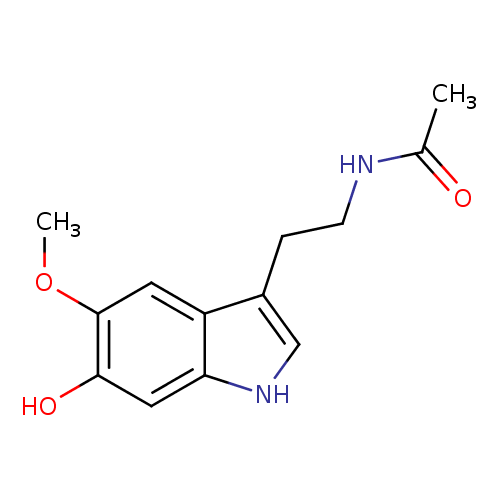 | |||||||||||||||||||||||||||||||||||||||||||||||||||||||||
| Synonyms |
| |||||||||||||||||||||||||||||||||||||||||||||||||||||||||
| Chemical Formula | C13H16N2O3 | |||||||||||||||||||||||||||||||||||||||||||||||||||||||||
| Average Molecular Weight | 248.2777 | |||||||||||||||||||||||||||||||||||||||||||||||||||||||||
| Monoisotopic Molecular Weight | 248.116092388 | |||||||||||||||||||||||||||||||||||||||||||||||||||||||||
| IUPAC Name | N-[2-(6-hydroxy-5-methoxy-1H-indol-3-yl)ethyl]acetamide | |||||||||||||||||||||||||||||||||||||||||||||||||||||||||
| Traditional Name | N-[2-(6-hydroxy-5-methoxy-1H-indol-3-yl)ethyl]acetamide | |||||||||||||||||||||||||||||||||||||||||||||||||||||||||
| CAS Registry Number | 2208-41-5 | |||||||||||||||||||||||||||||||||||||||||||||||||||||||||
| SMILES | COC1=C(O)C=C2NC=C(CCNC(C)=O)C2=C1 | |||||||||||||||||||||||||||||||||||||||||||||||||||||||||
| InChI Identifier | InChI=1S/C13H16N2O3/c1-8(16)14-4-3-9-7-15-11-6-12(17)13(18-2)5-10(9)11/h5-7,15,17H,3-4H2,1-2H3,(H,14,16) | |||||||||||||||||||||||||||||||||||||||||||||||||||||||||
| InChI Key | OMYMRCXOJJZYKE-UHFFFAOYSA-N | |||||||||||||||||||||||||||||||||||||||||||||||||||||||||
| Chemical Taxonomy | ||||||||||||||||||||||||||||||||||||||||||||||||||||||||||
| Description | belongs to the class of organic compounds known as hydroxyindoles. These are organic compounds containing an indole moiety that carries a hydroxyl group. | |||||||||||||||||||||||||||||||||||||||||||||||||||||||||
| Kingdom | Organic compounds | |||||||||||||||||||||||||||||||||||||||||||||||||||||||||
| Super Class | Organoheterocyclic compounds | |||||||||||||||||||||||||||||||||||||||||||||||||||||||||
| Class | Indoles and derivatives | |||||||||||||||||||||||||||||||||||||||||||||||||||||||||
| Sub Class | Hydroxyindoles | |||||||||||||||||||||||||||||||||||||||||||||||||||||||||
| Direct Parent | Hydroxyindoles | |||||||||||||||||||||||||||||||||||||||||||||||||||||||||
| Alternative Parents | ||||||||||||||||||||||||||||||||||||||||||||||||||||||||||
| Substituents |
| |||||||||||||||||||||||||||||||||||||||||||||||||||||||||
| Molecular Framework | Aromatic heteropolycyclic compounds | |||||||||||||||||||||||||||||||||||||||||||||||||||||||||
| External Descriptors |
| |||||||||||||||||||||||||||||||||||||||||||||||||||||||||
| Ontology | ||||||||||||||||||||||||||||||||||||||||||||||||||||||||||
| Status | Expected but not Quantified | |||||||||||||||||||||||||||||||||||||||||||||||||||||||||
| Origin |
| |||||||||||||||||||||||||||||||||||||||||||||||||||||||||
| Biofunction | Not Available | |||||||||||||||||||||||||||||||||||||||||||||||||||||||||
| Application | Not Available | |||||||||||||||||||||||||||||||||||||||||||||||||||||||||
| Cellular locations |
| |||||||||||||||||||||||||||||||||||||||||||||||||||||||||
| Physical Properties | ||||||||||||||||||||||||||||||||||||||||||||||||||||||||||
| State | Solid | |||||||||||||||||||||||||||||||||||||||||||||||||||||||||
| Experimental Properties |
| |||||||||||||||||||||||||||||||||||||||||||||||||||||||||
| Predicted Properties |
| |||||||||||||||||||||||||||||||||||||||||||||||||||||||||
| Spectra | ||||||||||||||||||||||||||||||||||||||||||||||||||||||||||
| Spectra | ||||||||||||||||||||||||||||||||||||||||||||||||||||||||||
| Biological Properties | ||||||||||||||||||||||||||||||||||||||||||||||||||||||||||
| Cellular Locations |
| |||||||||||||||||||||||||||||||||||||||||||||||||||||||||
| Biospecimen Locations |
| |||||||||||||||||||||||||||||||||||||||||||||||||||||||||
| Pathways |
| |||||||||||||||||||||||||||||||||||||||||||||||||||||||||
| Normal Concentrations | ||||||||||||||||||||||||||||||||||||||||||||||||||||||||||
| ||||||||||||||||||||||||||||||||||||||||||||||||||||||||||
| Abnormal Concentrations | ||||||||||||||||||||||||||||||||||||||||||||||||||||||||||
| Not Available | ||||||||||||||||||||||||||||||||||||||||||||||||||||||||||
| External Links | ||||||||||||||||||||||||||||||||||||||||||||||||||||||||||
| HMDB ID | HMDB0004081 | |||||||||||||||||||||||||||||||||||||||||||||||||||||||||
| DrugBank ID | Not Available | |||||||||||||||||||||||||||||||||||||||||||||||||||||||||
| Phenol Explorer Compound ID | Not Available | |||||||||||||||||||||||||||||||||||||||||||||||||||||||||
| FooDB ID | FDB023304 | |||||||||||||||||||||||||||||||||||||||||||||||||||||||||
| KNApSAcK ID | Not Available | |||||||||||||||||||||||||||||||||||||||||||||||||||||||||
| Chemspider ID | 1794 | |||||||||||||||||||||||||||||||||||||||||||||||||||||||||
| KEGG Compound ID | C05643 | |||||||||||||||||||||||||||||||||||||||||||||||||||||||||
| BioCyc ID | Not Available | |||||||||||||||||||||||||||||||||||||||||||||||||||||||||
| BiGG ID | 46185 | |||||||||||||||||||||||||||||||||||||||||||||||||||||||||
| Wikipedia Link | 6-Hydroxymelatonin | |||||||||||||||||||||||||||||||||||||||||||||||||||||||||
| METLIN ID | 7013 | |||||||||||||||||||||||||||||||||||||||||||||||||||||||||
| PubChem Compound | 1864 | |||||||||||||||||||||||||||||||||||||||||||||||||||||||||
| PDB ID | Not Available | |||||||||||||||||||||||||||||||||||||||||||||||||||||||||
| ChEBI ID | 2198 | |||||||||||||||||||||||||||||||||||||||||||||||||||||||||
| References | ||||||||||||||||||||||||||||||||||||||||||||||||||||||||||
| Synthesis Reference | Karam, Omar; Zunino, Fabien; Chagnaut, Vincent; Jouannetaud, Marie Paule; Jacquesy, Jean Claude. An efficient synthesis of 6-hydroxymelatonin, a human metabolite of melatonin. Tetrahedron Letters (2003), 44(7), 1511-1513. | |||||||||||||||||||||||||||||||||||||||||||||||||||||||||
| Material Safety Data Sheet (MSDS) | Not Available | |||||||||||||||||||||||||||||||||||||||||||||||||||||||||
| General References | Not Available | |||||||||||||||||||||||||||||||||||||||||||||||||||||||||
Enzymes
- General function:
- Secondary metabolites biosynthesis, transport and catabolism
- Specific function:
- A cytochrome P450 monooxygenase involved in the metabolism of arachidonic acid and its conjugates. Mechanistically, uses molecular oxygen inserting one oxygen atom into a substrate, and reducing the second into a water molecule, with two electrons provided by NADPH via cytochrome P450 reductase (CPR; NADPH-ferrihemoprotein reductase). Acts as an omega and omega-1 hydroxylase for arachidonic acid and possibly for other long chain fatty acids. May modulate the arachidonic acid signaling pathway and play a role in other fatty acid signaling processes. May downregulate the biological activities of N-arachidonoyl-serotonin, an endocannabinoid that has anti-nociceptive effects through inhibition of fatty acid amide hydrolase FAAH, TRPV1 receptor and T-type calcium channels. Catalyzes C-2 oxidation of the indole ring of N-arachidonoyl-serotonin forming a less active product 2-oxo-N-arachidonoyl-serotonin.
- Gene Name:
- CYP2U1
- Uniprot ID:
- Q0IIF9
- Molecular weight:
- 61997.0
Reactions
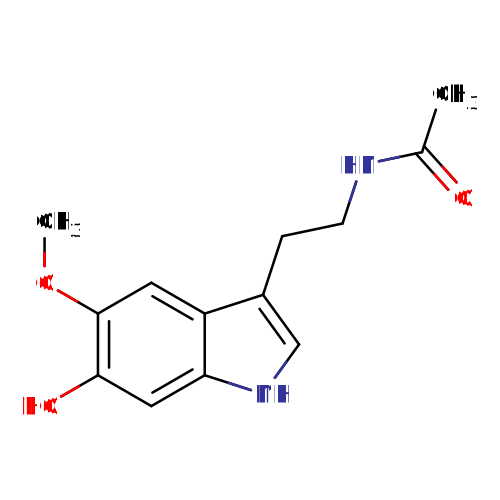
| Melatonin + Oxygen + Reduced flavoprotein → 6-Hydroxymelatonin + Water + Oxidized flavoprotein | details |