
Showing metabocard for LPA(P-16:0e/0:0) (BMDB0011154)
| Record Information | ||||||||||||||||||||||||||||||||||||||||||||||||||||||||||
|---|---|---|---|---|---|---|---|---|---|---|---|---|---|---|---|---|---|---|---|---|---|---|---|---|---|---|---|---|---|---|---|---|---|---|---|---|---|---|---|---|---|---|---|---|---|---|---|---|---|---|---|---|---|---|---|---|---|---|
| Version | 1.0 | |||||||||||||||||||||||||||||||||||||||||||||||||||||||||
| Creation Date | 2016-10-03 18:13:44 UTC | |||||||||||||||||||||||||||||||||||||||||||||||||||||||||
| Update Date | 2020-04-22 15:42:58 UTC | |||||||||||||||||||||||||||||||||||||||||||||||||||||||||
| BMDB ID | BMDB0011154 | |||||||||||||||||||||||||||||||||||||||||||||||||||||||||
| Secondary Accession Numbers |
| |||||||||||||||||||||||||||||||||||||||||||||||||||||||||
| Metabolite Identification | ||||||||||||||||||||||||||||||||||||||||||||||||||||||||||
| Common Name | LPA(P-16:0e/0:0) | |||||||||||||||||||||||||||||||||||||||||||||||||||||||||
| Description | LysoPA(P-16:0/0:0) is a lysophosphatidic acid. It is a glycerophospholipid in which a phosphate moiety occupies a glycerol substitution site. Lysophosphatidic acids can have different combinations of fatty acids of varying lengths and saturation attached at the C-1 (sn-1) or C-2 (sn-2) position. Fatty acids containing 16 and 18 carbons are the most common.LysoPA(P-16:0/0:0), in particular, consists of one 1Z-hexadecenyl chain. Lysophosphatidic acid is the simplest possible glycerophospholipid. It is the biosynthetic precursor of phosphatidic acid. Although it is present at very low levels only in animal tissues, it is extremely important biologically, influencing many biochemical processes. | |||||||||||||||||||||||||||||||||||||||||||||||||||||||||
| Structure | 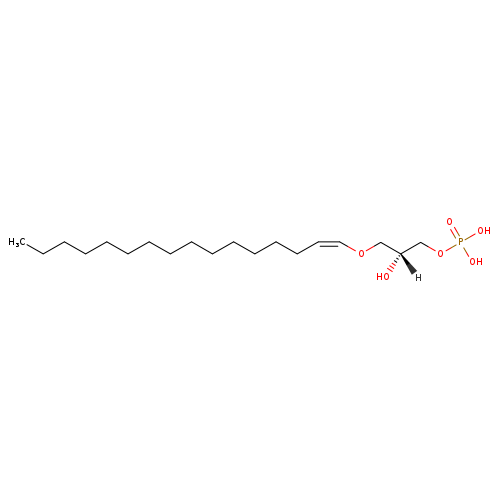 | |||||||||||||||||||||||||||||||||||||||||||||||||||||||||
| Synonyms |
| |||||||||||||||||||||||||||||||||||||||||||||||||||||||||
| Chemical Formula | C19H39O6P | |||||||||||||||||||||||||||||||||||||||||||||||||||||||||
| Average Molecular Weight | 394.4831 | |||||||||||||||||||||||||||||||||||||||||||||||||||||||||
| Monoisotopic Molecular Weight | 394.248425492 | |||||||||||||||||||||||||||||||||||||||||||||||||||||||||
| IUPAC Name | [(2R)-3-[(1Z)-hexadec-1-en-1-yloxy]-2-hydroxypropoxy]phosphonic acid | |||||||||||||||||||||||||||||||||||||||||||||||||||||||||
| Traditional Name | (2R)-3-[(1Z)-hexadec-1-en-1-yloxy]-2-hydroxypropoxyphosphonic acid | |||||||||||||||||||||||||||||||||||||||||||||||||||||||||
| CAS Registry Number | Not Available | |||||||||||||||||||||||||||||||||||||||||||||||||||||||||
| SMILES | CCCCCCCCCCCCCC\C=C/OC[C@](O)([H])COP(=O)(O)O | |||||||||||||||||||||||||||||||||||||||||||||||||||||||||
| InChI Identifier | InChI=1S/C19H39O6P/c1-2-3-4-5-6-7-8-9-10-11-12-13-14-15-16-24-17-19(20)18-25-26(21,22)23/h15-16,19-20H,2-14,17-18H2,1H3,(H2,21,22,23)/b16-15-/t19-/m1/s1 | |||||||||||||||||||||||||||||||||||||||||||||||||||||||||
| InChI Key | LBGSRVIXIVDRQM-OAXWQBPPSA-N | |||||||||||||||||||||||||||||||||||||||||||||||||||||||||
| Chemical Taxonomy | ||||||||||||||||||||||||||||||||||||||||||||||||||||||||||
| Description | belongs to the class of organic compounds known as glycerophosphates. Glycerophosphates are compounds containing a glycerol linked to a phosphate group. | |||||||||||||||||||||||||||||||||||||||||||||||||||||||||
| Kingdom | Organic compounds | |||||||||||||||||||||||||||||||||||||||||||||||||||||||||
| Super Class | Lipids and lipid-like molecules | |||||||||||||||||||||||||||||||||||||||||||||||||||||||||
| Class | Glycerophospholipids | |||||||||||||||||||||||||||||||||||||||||||||||||||||||||
| Sub Class | Glycerophosphates | |||||||||||||||||||||||||||||||||||||||||||||||||||||||||
| Direct Parent | Glycerophosphates | |||||||||||||||||||||||||||||||||||||||||||||||||||||||||
| Alternative Parents | ||||||||||||||||||||||||||||||||||||||||||||||||||||||||||
| Substituents |
| |||||||||||||||||||||||||||||||||||||||||||||||||||||||||
| Molecular Framework | Aliphatic acyclic compounds | |||||||||||||||||||||||||||||||||||||||||||||||||||||||||
| External Descriptors |
| |||||||||||||||||||||||||||||||||||||||||||||||||||||||||
| Ontology | ||||||||||||||||||||||||||||||||||||||||||||||||||||||||||
| Status | Expected but not Quantified | |||||||||||||||||||||||||||||||||||||||||||||||||||||||||
| Origin |
| |||||||||||||||||||||||||||||||||||||||||||||||||||||||||
| Biofunction | Not Available | |||||||||||||||||||||||||||||||||||||||||||||||||||||||||
| Application | Not Available | |||||||||||||||||||||||||||||||||||||||||||||||||||||||||
| Cellular locations |
| |||||||||||||||||||||||||||||||||||||||||||||||||||||||||
| Physical Properties | ||||||||||||||||||||||||||||||||||||||||||||||||||||||||||
| State | Solid | |||||||||||||||||||||||||||||||||||||||||||||||||||||||||
| Experimental Properties |
| |||||||||||||||||||||||||||||||||||||||||||||||||||||||||
| Predicted Properties |
| |||||||||||||||||||||||||||||||||||||||||||||||||||||||||
| Spectra | ||||||||||||||||||||||||||||||||||||||||||||||||||||||||||
| Spectra | ||||||||||||||||||||||||||||||||||||||||||||||||||||||||||
| Biological Properties | ||||||||||||||||||||||||||||||||||||||||||||||||||||||||||
| Cellular Locations |
| |||||||||||||||||||||||||||||||||||||||||||||||||||||||||
| Biospecimen Locations | Not Available | |||||||||||||||||||||||||||||||||||||||||||||||||||||||||
| Pathways |
| |||||||||||||||||||||||||||||||||||||||||||||||||||||||||
| Normal Concentrations | ||||||||||||||||||||||||||||||||||||||||||||||||||||||||||
| Not Available | ||||||||||||||||||||||||||||||||||||||||||||||||||||||||||
| Abnormal Concentrations | ||||||||||||||||||||||||||||||||||||||||||||||||||||||||||
| Not Available | ||||||||||||||||||||||||||||||||||||||||||||||||||||||||||
| External Links | ||||||||||||||||||||||||||||||||||||||||||||||||||||||||||
| HMDB ID | HMDB0011154 | |||||||||||||||||||||||||||||||||||||||||||||||||||||||||
| DrugBank ID | Not Available | |||||||||||||||||||||||||||||||||||||||||||||||||||||||||
| Phenol Explorer Compound ID | Not Available | |||||||||||||||||||||||||||||||||||||||||||||||||||||||||
| FooDB ID | FDB027929 | |||||||||||||||||||||||||||||||||||||||||||||||||||||||||
| KNApSAcK ID | Not Available | |||||||||||||||||||||||||||||||||||||||||||||||||||||||||
| Chemspider ID | 24766520 | |||||||||||||||||||||||||||||||||||||||||||||||||||||||||
| KEGG Compound ID | C15646 | |||||||||||||||||||||||||||||||||||||||||||||||||||||||||
| BioCyc ID | Not Available | |||||||||||||||||||||||||||||||||||||||||||||||||||||||||
| BiGG ID | Not Available | |||||||||||||||||||||||||||||||||||||||||||||||||||||||||
| Wikipedia Link | Not Available | |||||||||||||||||||||||||||||||||||||||||||||||||||||||||
| METLIN ID | Not Available | |||||||||||||||||||||||||||||||||||||||||||||||||||||||||
| PubChem Compound | 52929772 | |||||||||||||||||||||||||||||||||||||||||||||||||||||||||
| PDB ID | Not Available | |||||||||||||||||||||||||||||||||||||||||||||||||||||||||
| ChEBI ID | Not Available | |||||||||||||||||||||||||||||||||||||||||||||||||||||||||
| References | ||||||||||||||||||||||||||||||||||||||||||||||||||||||||||
| Synthesis Reference | Not Available | |||||||||||||||||||||||||||||||||||||||||||||||||||||||||
| Material Safety Data Sheet (MSDS) | Not Available | |||||||||||||||||||||||||||||||||||||||||||||||||||||||||
| General References | Not Available | |||||||||||||||||||||||||||||||||||||||||||||||||||||||||
Enzymes
- General function:
- Involved in G-protein coupled receptor protein signalin
- Specific function:
- Receptor for lysophosphatidic acid (LPA). Plays a role in the reorganization of the actin cytoskeleton, cell migration, differentiation and proliferation, and thereby contributes to the responses to tissue damage and infectious agents. Activates downstream signaling cascades via the G(i)/G(o), G(12)/G(13), and G(q) families of heteromeric G proteins. Signaling inhibits adenylyl cyclase activity and decreases cellular cAMP levels. Signaling triggers an increase of cytoplasmic Ca(2+) levels. Activates RALA; this leads to the activation of phospholipase C (PLC) and the formation of inositol 1,4,5-trisphosphate. Signaling mediates activation of down-stream MAP kinases. Contributes to the regulation of cell shape. Promotes Rho-dependent reorganization of the actin cytoskeleton in neuronal cells and neurite retraction. Promotes the activation of Rho and the formation of actin stress fibers. Promotes formation of lamellipodia at the leading edge of migrating cells via activation of RAC1. Through its function as lysophosphatidic acid receptor, plays a role in chemotaxis and cell migration, including responses to injury and wounding. Plays a role in triggering inflammation in response to bacterial lipopolysaccharide (LPS) via its interaction with CD14. Promotes cell proliferation in response to lysophosphatidic acid. Required for normal skeleton development. May play a role in osteoblast differentiation. Required for normal brain development. Required for normal proliferation, survival and maturation of newly formed neurons in the adult dentate gyrus. Plays a role in pain perception and in the initiation of neuropathic pain.
- Gene Name:
- LPAR1
- Uniprot ID:
- Q28031
- Molecular weight:
- 41070.0
- General function:
- Involved in purinergic nucleotide receptor activity, G-
- Specific function:
- Receptor for lysophosphatidic acid (LPA), a mediator of diverse cellular activities.
- Gene Name:
- LPAR5
- Uniprot ID:
- Q3ZC80
- Molecular weight:
- 40639.0