
Showing metabocard for Sulfate (BMDB0001448)
| Record Information | |||||||||||||||||||||||||||||||||||||||||||||||||
|---|---|---|---|---|---|---|---|---|---|---|---|---|---|---|---|---|---|---|---|---|---|---|---|---|---|---|---|---|---|---|---|---|---|---|---|---|---|---|---|---|---|---|---|---|---|---|---|---|---|
| Version | 1.0 | ||||||||||||||||||||||||||||||||||||||||||||||||
| Creation Date | 2016-09-30 22:46:07 UTC | ||||||||||||||||||||||||||||||||||||||||||||||||
| Update Date | 2020-05-21 16:28:36 UTC | ||||||||||||||||||||||||||||||||||||||||||||||||
| BMDB ID | BMDB0001448 | ||||||||||||||||||||||||||||||||||||||||||||||||
| Secondary Accession Numbers |
| ||||||||||||||||||||||||||||||||||||||||||||||||
| Metabolite Identification | |||||||||||||||||||||||||||||||||||||||||||||||||
| Common Name | Sulfate | ||||||||||||||||||||||||||||||||||||||||||||||||
| Description | Sulfate, also known as sulphuric acid or sulphate, belongs to the class of inorganic compounds known as non-metal sulfates. These are inorganic non-metallic compounds containing a sulfate as its largest oxoanion. Sulfate is an extremely strong acidic compound (based on its pKa). Sulfate exists in all living species, ranging from bacteria to humans. dehydroepiandrosterone and sulfate can be biosynthesized from dehydroepiandrosterone sulfate through its interaction with the enzyme steryl-sulfatase. In cattle, sulfate is involved in the metabolic pathway called the androgen and estrogen metabolism pathway. Sulfate is a potentially toxic compound. | ||||||||||||||||||||||||||||||||||||||||||||||||
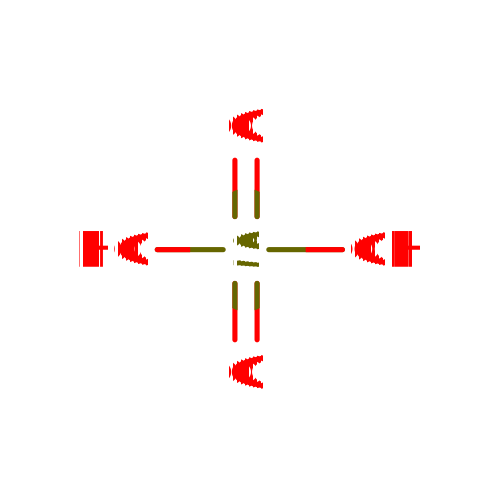
| Structure |  | ||||||||||||||||||||||||||||||||||||||||||||||||
| Synonyms |
| ||||||||||||||||||||||||||||||||||||||||||||||||
| Chemical Formula | H2O4S | ||||||||||||||||||||||||||||||||||||||||||||||||
| Average Molecular Weight | 98.078 | ||||||||||||||||||||||||||||||||||||||||||||||||
| Monoisotopic Molecular Weight | 97.967379242 | ||||||||||||||||||||||||||||||||||||||||||||||||
| IUPAC Name | sulfuric acid | ||||||||||||||||||||||||||||||||||||||||||||||||
| Traditional Name | sulfuric acid | ||||||||||||||||||||||||||||||||||||||||||||||||
| CAS Registry Number | 7664-93-9 | ||||||||||||||||||||||||||||||||||||||||||||||||
| SMILES | OS(O)(=O)=O | ||||||||||||||||||||||||||||||||||||||||||||||||
| InChI Identifier | InChI=1S/H2O4S/c1-5(2,3)4/h(H2,1,2,3,4) | ||||||||||||||||||||||||||||||||||||||||||||||||
| InChI Key | QAOWNCQODCNURD-UHFFFAOYSA-N | ||||||||||||||||||||||||||||||||||||||||||||||||
| Chemical Taxonomy | |||||||||||||||||||||||||||||||||||||||||||||||||
| Description | belongs to the class of inorganic compounds known as non-metal sulfates. These are inorganic non-metallic compounds containing a sulfate as its largest oxoanion. | ||||||||||||||||||||||||||||||||||||||||||||||||
| Kingdom | Inorganic compounds | ||||||||||||||||||||||||||||||||||||||||||||||||
| Super Class | Homogeneous non-metal compounds | ||||||||||||||||||||||||||||||||||||||||||||||||
| Class | Non-metal oxoanionic compounds | ||||||||||||||||||||||||||||||||||||||||||||||||
| Sub Class | Non-metal sulfates | ||||||||||||||||||||||||||||||||||||||||||||||||
| Direct Parent | Non-metal sulfates | ||||||||||||||||||||||||||||||||||||||||||||||||
| Alternative Parents | |||||||||||||||||||||||||||||||||||||||||||||||||
| Substituents |
| ||||||||||||||||||||||||||||||||||||||||||||||||
| Molecular Framework | Not Available | ||||||||||||||||||||||||||||||||||||||||||||||||
| External Descriptors |
| ||||||||||||||||||||||||||||||||||||||||||||||||
| Ontology | |||||||||||||||||||||||||||||||||||||||||||||||||
| Status | Detected but not Quantified | ||||||||||||||||||||||||||||||||||||||||||||||||
| Origin |
| ||||||||||||||||||||||||||||||||||||||||||||||||
| Biofunction | Not Available | ||||||||||||||||||||||||||||||||||||||||||||||||
| Application | Not Available | ||||||||||||||||||||||||||||||||||||||||||||||||
| Cellular locations |
| ||||||||||||||||||||||||||||||||||||||||||||||||
| Physical Properties | |||||||||||||||||||||||||||||||||||||||||||||||||
| State | Solid | ||||||||||||||||||||||||||||||||||||||||||||||||
| Experimental Properties |
| ||||||||||||||||||||||||||||||||||||||||||||||||
| Predicted Properties |
| ||||||||||||||||||||||||||||||||||||||||||||||||
| Spectra | |||||||||||||||||||||||||||||||||||||||||||||||||
| Spectra | |||||||||||||||||||||||||||||||||||||||||||||||||
| Biological Properties | |||||||||||||||||||||||||||||||||||||||||||||||||
| Cellular Locations |
| ||||||||||||||||||||||||||||||||||||||||||||||||
| Biospecimen Locations |
| ||||||||||||||||||||||||||||||||||||||||||||||||
| Pathways |
| ||||||||||||||||||||||||||||||||||||||||||||||||
| Normal Concentrations | |||||||||||||||||||||||||||||||||||||||||||||||||
| |||||||||||||||||||||||||||||||||||||||||||||||||
| Abnormal Concentrations | |||||||||||||||||||||||||||||||||||||||||||||||||
| Not Available | |||||||||||||||||||||||||||||||||||||||||||||||||
| External Links | |||||||||||||||||||||||||||||||||||||||||||||||||
| HMDB ID | HMDB0001448 | ||||||||||||||||||||||||||||||||||||||||||||||||
| DrugBank ID | DB11309 | ||||||||||||||||||||||||||||||||||||||||||||||||
| Phenol Explorer Compound ID | Not Available | ||||||||||||||||||||||||||||||||||||||||||||||||
| FooDB ID | FDB013392 | ||||||||||||||||||||||||||||||||||||||||||||||||
| KNApSAcK ID | C00007530 | ||||||||||||||||||||||||||||||||||||||||||||||||
| Chemspider ID | 1086 | ||||||||||||||||||||||||||||||||||||||||||||||||
| KEGG Compound ID | C00059 | ||||||||||||||||||||||||||||||||||||||||||||||||
| BioCyc ID | NH42SO4 | ||||||||||||||||||||||||||||||||||||||||||||||||
| BiGG ID | 33697 | ||||||||||||||||||||||||||||||||||||||||||||||||
| Wikipedia Link | Sulfuric_acid | ||||||||||||||||||||||||||||||||||||||||||||||||
| METLIN ID | 3233 | ||||||||||||||||||||||||||||||||||||||||||||||||
| PubChem Compound | 1117 | ||||||||||||||||||||||||||||||||||||||||||||||||
| PDB ID | Not Available | ||||||||||||||||||||||||||||||||||||||||||||||||
| ChEBI ID | 26836 | ||||||||||||||||||||||||||||||||||||||||||||||||
| References | |||||||||||||||||||||||||||||||||||||||||||||||||
| Synthesis Reference | Zhang, Qiu-Ju; Wang, Xiao; Chen, Jian-Min; Zhuang, Guo-Shun. Formation of Fe(II) (aq) and sulfate via heterogeneous reaction of SO2 with Fe2O3. Gaodeng Xuexiao Huaxue Xuebao (2006), 27(7), 1347-1350. | ||||||||||||||||||||||||||||||||||||||||||||||||
| Material Safety Data Sheet (MSDS) | Not Available | ||||||||||||||||||||||||||||||||||||||||||||||||
| General References | Not Available | ||||||||||||||||||||||||||||||||||||||||||||||||
Enzymes
- General function:
- Inorganic ion transport and metabolism
- Specific function:
- Hydrolyzes cerebroside sulfate.
- Gene Name:
- ARSA
- Uniprot ID:
- Q08DD1
- Molecular weight:
- 53807.0
Reactions
| 3-O-Sulfogalactosylceramide (d18:1/24:0) + Water → Galactosylceramide (d18:1/16:0) + Sulfate | details |
| DHEA sulfate + Water → Dehydroepiandrosterone + Sulfate | details |
- General function:
- Inorganic ion transport and metabolism
- Specific function:
- Not Available
- Gene Name:
- MPST
- Uniprot ID:
- Q3MHG3
- Molecular weight:
- 33193.0
- General function:
- Inorganic ion transport and metabolism
- Specific function:
- Together with MRPL18, acts as a mitochondrial import factor for the cytosolic 5S rRNA. Only the nascent unfolded cytoplasmic form is able to bind to the 5S rRNA (By similarity). Formation of iron-sulfur complexes and cyanide detoxification. Binds molecular oxygen and sulfur.
- Gene Name:
- TST
- Uniprot ID:
- P00586
- Molecular weight:
- 33296.0
- General function:
- Involved in calcium ion binding
- Specific function:
- Endoglycosidase that cleaves heparan sulfate proteoglycans (HSPGs) into heparan sulfate side chains and core proteoglycans. Participates in extracellular matrix (ECM) degradation and remodeling. Selectively cleaves the linkage between a glucuronic acid unit and an N-sulfo glucosamine unit carrying either a 3-O-sulfo or a 6-O-sulfo group. Can also cleave the linkage between a glucuronic acid unit and an N-sulfo glucosamine unit carrying a 2-O-sulfo group, but not linkages between a glucuronic acid unit and a 2-O-sulfated iduronic acid moiety. Essentially inactive at neutral pH but becomes active under acidic conditions such as during tumor invasion and in inflammatory processes. Facilitates cell migration associated with metastasis, wound healing and inflammation. Enhances shedding of syndecans. Acts as procoagulant by enhancing the generation of activated factor X/F10 in the presence of tissue factor/TF and activated factor VII/F7. Independent of its enzymatic activity, increases cell adhesion to the extracellular matrix (ECM). Enhances AKT1/PKB phosphorylation, possibly via interaction with a lipid raft-resident receptor. Plays a role in the regulation of osteogenesis. Enhances angiogenesis through up-regulation of SRC-mediated activation of VEGF. Implicated in hair follicle inner root sheath differentiation and hair homeostasis (By similarity).
- Gene Name:
- HPSE
- Uniprot ID:
- Q9MYY0
- Molecular weight:
- 61077.0
- General function:
- Involved in calcium ion binding
- Specific function:
- May play a role in the structural integrity of cartilage via its interaction with other extracellular matrix proteins such as the collagens and fibronectin. Can mediate the interaction of chondrocytes with the cartilage extracellular matrix through interaction with cell surface integrin receptors. Could play a role in the pathogenesis of osteoarthritis. Potent suppressor of apoptosis in both primary chondrocytes and transformed cells. Suppresses apoptosis by blocking the activation of caspase-3 and by inducing the IAP family of survival proteins (BIRC3, BIRC2, BIRC5 and XIAP). Essential for maintaining a vascular smooth muscle cells (VSMCs) contractile/differentiated phenotype under physiological and pathological stimuli. Maintains this phenotype of VSMCs by interacting with ITGA7 (By similarity).
- Gene Name:
- COMP
- Uniprot ID:
- P35445
- Molecular weight:
- 82362.0
- General function:
- Inorganic ion transport and metabolism
- Specific function:
- Not Available
- Gene Name:
- TSTD3
- Uniprot ID:
- A8R4B3
- Molecular weight:
- 17869.0
- General function:
- Inorganic ion transport and metabolism
- Specific function:
- Not Available
- Gene Name:
- SLC26A6
- Uniprot ID:
- Q08DQ8
- Molecular weight:
- 83332.0
- General function:
- Inorganic ion transport and metabolism
- Specific function:
- Acts as a DIDS-sensitive anion exchanger mediating chloride, sulfate and oxalate transport. May fulfill critical anion exchange functions in male germ line during meiosis and hence may play a role in spermatogenesis. May be involved in a new regulatory pathway linking sulfate transport to RhoGTPase signaling in male germ cells. A critical component of the sperm annulus that is essential for correct sperm tail differentiation and motility and hence male fertility (By similarity).
- Gene Name:
- SLC26A8
- Uniprot ID:
- A6QNW6
- Molecular weight:
- 108744.0
- General function:
- Involved in cytokine activity
- Specific function:
- Growth factor active in angiogenesis, vasculogenesis and endothelial cell growth. Induces endothelial cell proliferation, promotes cell migration, inhibits apoptosis and induces permeabilization of blood vessels. Binds to the FLT1/VEGFR1 and KDR/VEGFR2 receptors, heparan sulfate and heparin (By similarity). Binding to NRP1 receptor initiates a signaling pathway needed for motor neuron axon guidance and cell body migration, including for the caudal migration of facial motor neurons from rhombomere 4 to rhombomere 6 during embryonic development (By similarity).
- Gene Name:
- VEGFA
- Uniprot ID:
- P15691
- Molecular weight:
- 22310.0
- General function:
- Involved in anion exchanger activity
- Specific function:
- Exhibits sodium-independent sulfate anion transporter activity that may cooperate with SLC26A2 to mediate DIDS-sensitive sulfate uptake into high endothelial venules endothelial cells (HEVEC).
- Gene Name:
- SLC26A11
- Uniprot ID:
- Q58DD2
- Molecular weight:
- 65350.0
- General function:
- Cell wall/membrane/envelope biogenesis
- Specific function:
- May anchor basement membranes to the underlying connective tissue.
- Gene Name:
- PRELP
- Uniprot ID:
- Q9GKN8
- Molecular weight:
- 43683.0
- General function:
- Inorganic ion transport and metabolism
- Specific function:
- Sulfate transporter. May play a role in endochondral bone formation.
- Gene Name:
- SLC26A2
- Uniprot ID:
- Q9BEG8
- Molecular weight:
- 81540.0
- General function:
- Involved in calcium ion binding
- Specific function:
- Receptor potentially involved in both adhesion and signaling processes early after leukocyte activation. Plays an essential role in leukocyte migration.
- Gene Name:
- ADGRE5
- Uniprot ID:
- Q8SQA4
- Molecular weight:
- 80322.0
- General function:
- Inorganic ion transport and metabolism
- Specific function:
- Chloride/bicarbonate exchanger.
- Gene Name:
- SLC26A3
- Uniprot ID:
- A4IFH8
- Molecular weight:
- 84344.0