
Showing metabocard for (S)-Methylmalonic acid semialdehyde (BMDB0002217)
| Record Information | ||||||||||||||||||||||||||||||||||||||||||||||||||||||||||
|---|---|---|---|---|---|---|---|---|---|---|---|---|---|---|---|---|---|---|---|---|---|---|---|---|---|---|---|---|---|---|---|---|---|---|---|---|---|---|---|---|---|---|---|---|---|---|---|---|---|---|---|---|---|---|---|---|---|---|
| Version | 1.0 | |||||||||||||||||||||||||||||||||||||||||||||||||||||||||
| Creation Date | 2016-09-30 22:52:48 UTC | |||||||||||||||||||||||||||||||||||||||||||||||||||||||||
| Update Date | 2020-05-21 16:28:46 UTC | |||||||||||||||||||||||||||||||||||||||||||||||||||||||||
| BMDB ID | BMDB0002217 | |||||||||||||||||||||||||||||||||||||||||||||||||||||||||
| Secondary Accession Numbers |
| |||||||||||||||||||||||||||||||||||||||||||||||||||||||||
| Metabolite Identification | ||||||||||||||||||||||||||||||||||||||||||||||||||||||||||
| Common Name | (S)-Methylmalonic acid semialdehyde | |||||||||||||||||||||||||||||||||||||||||||||||||||||||||
| Description | (S)-Methylmalonic acid semialdehyde, also known as (s)-methylmalonic acid semialdehyde, belongs to the class of organic compounds known as 1,3-dicarbonyl compounds. These are carbonyl compounds with the generic formula O=C(R)C(H)C(R')=O, where R and R' can be any group (S)-Methylmalonic acid semialdehyde is a very hydrophobic molecule, practically insoluble (in water), and relatively neutral (S)-Methylmalonic acid semialdehyde exists in all living organisms, ranging from bacteria to humans (S)-Methylmalonic acid semialdehyde participates in a number of enzymatic reactions, within cattle. In particular, (S)-Methylmalonic acid semialdehyde can be biosynthesized from (S)-3-hydroxyisobutyric acid through the action of the enzymes 3-hydroxyisobutyrate dehydrogenase, mitochondrial and enoyl-CoA hydratase, mitochondrial. In addition, (S)-Methylmalonic acid semialdehyde and L-glutamic acid can be biosynthesized from (S)-b-aminoisobutyric acid and oxoglutaric acid through the action of the enzyme 4-aminobutyrate aminotransferase, mitochondrial. In cattle, (S)-methylmalonic acid semialdehyde is involved in the metabolic pathway called the valine, leucine, and isoleucine degradation pathway. | |||||||||||||||||||||||||||||||||||||||||||||||||||||||||
| Structure | 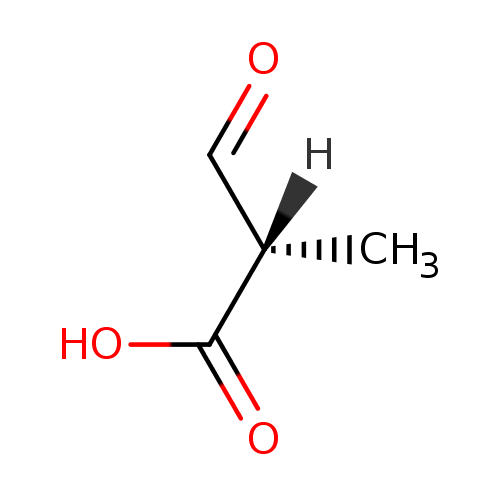 | |||||||||||||||||||||||||||||||||||||||||||||||||||||||||
| Synonyms |
| |||||||||||||||||||||||||||||||||||||||||||||||||||||||||
| Chemical Formula | C4H6O3 | |||||||||||||||||||||||||||||||||||||||||||||||||||||||||
| Average Molecular Weight | 102.0886 | |||||||||||||||||||||||||||||||||||||||||||||||||||||||||
| Monoisotopic Molecular Weight | 102.031694058 | |||||||||||||||||||||||||||||||||||||||||||||||||||||||||
| IUPAC Name | (2S)-2-methyl-3-oxopropanoic acid | |||||||||||||||||||||||||||||||||||||||||||||||||||||||||
| Traditional Name | (S)-methylmalonaldehydic acid | |||||||||||||||||||||||||||||||||||||||||||||||||||||||||
| CAS Registry Number | 99043-16-0 | |||||||||||||||||||||||||||||||||||||||||||||||||||||||||
| SMILES | C[C@@H](C=O)C(O)=O | |||||||||||||||||||||||||||||||||||||||||||||||||||||||||
| InChI Identifier | InChI=1S/C4H6O3/c1-3(2-5)4(6)7/h2-3H,1H3,(H,6,7)/t3-/m0/s1 | |||||||||||||||||||||||||||||||||||||||||||||||||||||||||
| InChI Key | VOKUMXABRRXHAR-VKHMYHEASA-N | |||||||||||||||||||||||||||||||||||||||||||||||||||||||||
| Chemical Taxonomy | ||||||||||||||||||||||||||||||||||||||||||||||||||||||||||
| Description | belongs to the class of organic compounds known as 1,3-dicarbonyl compounds. These are carbonyl compounds with the generic formula O=C(R)C(H)C(R')=O, where R and R' can be any group. | |||||||||||||||||||||||||||||||||||||||||||||||||||||||||
| Kingdom | Organic compounds | |||||||||||||||||||||||||||||||||||||||||||||||||||||||||
| Super Class | Organic oxygen compounds | |||||||||||||||||||||||||||||||||||||||||||||||||||||||||
| Class | Organooxygen compounds | |||||||||||||||||||||||||||||||||||||||||||||||||||||||||
| Sub Class | Carbonyl compounds | |||||||||||||||||||||||||||||||||||||||||||||||||||||||||
| Direct Parent | 1,3-dicarbonyl compounds | |||||||||||||||||||||||||||||||||||||||||||||||||||||||||
| Alternative Parents | ||||||||||||||||||||||||||||||||||||||||||||||||||||||||||
| Substituents |
| |||||||||||||||||||||||||||||||||||||||||||||||||||||||||
| Molecular Framework | Aliphatic acyclic compounds | |||||||||||||||||||||||||||||||||||||||||||||||||||||||||
| External Descriptors |
| |||||||||||||||||||||||||||||||||||||||||||||||||||||||||
| Ontology | ||||||||||||||||||||||||||||||||||||||||||||||||||||||||||
| Status | Expected but not Quantified | |||||||||||||||||||||||||||||||||||||||||||||||||||||||||
| Origin |
| |||||||||||||||||||||||||||||||||||||||||||||||||||||||||
| Biofunction | Not Available | |||||||||||||||||||||||||||||||||||||||||||||||||||||||||
| Application | Not Available | |||||||||||||||||||||||||||||||||||||||||||||||||||||||||
| Cellular locations | Not Available | |||||||||||||||||||||||||||||||||||||||||||||||||||||||||
| Physical Properties | ||||||||||||||||||||||||||||||||||||||||||||||||||||||||||
| State | Solid | |||||||||||||||||||||||||||||||||||||||||||||||||||||||||
| Experimental Properties |
| |||||||||||||||||||||||||||||||||||||||||||||||||||||||||
| Predicted Properties |
| |||||||||||||||||||||||||||||||||||||||||||||||||||||||||
| Spectra | ||||||||||||||||||||||||||||||||||||||||||||||||||||||||||
| Spectra | ||||||||||||||||||||||||||||||||||||||||||||||||||||||||||
| Biological Properties | ||||||||||||||||||||||||||||||||||||||||||||||||||||||||||
| Cellular Locations | Not Available | |||||||||||||||||||||||||||||||||||||||||||||||||||||||||
| Biospecimen Locations | Not Available | |||||||||||||||||||||||||||||||||||||||||||||||||||||||||
| Pathways |
| |||||||||||||||||||||||||||||||||||||||||||||||||||||||||
| Normal Concentrations | ||||||||||||||||||||||||||||||||||||||||||||||||||||||||||
| Not Available | ||||||||||||||||||||||||||||||||||||||||||||||||||||||||||
| Abnormal Concentrations | ||||||||||||||||||||||||||||||||||||||||||||||||||||||||||
| Not Available | ||||||||||||||||||||||||||||||||||||||||||||||||||||||||||
| External Links | ||||||||||||||||||||||||||||||||||||||||||||||||||||||||||
| HMDB ID | HMDB0002217 | |||||||||||||||||||||||||||||||||||||||||||||||||||||||||
| DrugBank ID | Not Available | |||||||||||||||||||||||||||||||||||||||||||||||||||||||||
| Phenol Explorer Compound ID | Not Available | |||||||||||||||||||||||||||||||||||||||||||||||||||||||||
| FooDB ID | FDB022912 | |||||||||||||||||||||||||||||||||||||||||||||||||||||||||
| KNApSAcK ID | Not Available | |||||||||||||||||||||||||||||||||||||||||||||||||||||||||
| Chemspider ID | 4575365 | |||||||||||||||||||||||||||||||||||||||||||||||||||||||||
| KEGG Compound ID | C06002 | |||||||||||||||||||||||||||||||||||||||||||||||||||||||||
| BioCyc ID | CH3-MALONATE-S-ALD | |||||||||||||||||||||||||||||||||||||||||||||||||||||||||
| BiGG ID | 34698 | |||||||||||||||||||||||||||||||||||||||||||||||||||||||||
| Wikipedia Link | Not Available | |||||||||||||||||||||||||||||||||||||||||||||||||||||||||
| METLIN ID | 6553 | |||||||||||||||||||||||||||||||||||||||||||||||||||||||||
| PubChem Compound | 5462303 | |||||||||||||||||||||||||||||||||||||||||||||||||||||||||
| PDB ID | Not Available | |||||||||||||||||||||||||||||||||||||||||||||||||||||||||
| ChEBI ID | 27821 | |||||||||||||||||||||||||||||||||||||||||||||||||||||||||
| References | ||||||||||||||||||||||||||||||||||||||||||||||||||||||||||
| Synthesis Reference | Not Available | |||||||||||||||||||||||||||||||||||||||||||||||||||||||||
| Material Safety Data Sheet (MSDS) | Not Available | |||||||||||||||||||||||||||||||||||||||||||||||||||||||||
| General References | Not Available | |||||||||||||||||||||||||||||||||||||||||||||||||||||||||
Enzymes
- General function:
- Energy production and conversion
- Specific function:
- Plays a role in valine and pyrimidine metabolism. Binds fatty acyl-CoA.
- Gene Name:
- ALDH6A1
- Uniprot ID:
- Q07536
- Molecular weight:
- 58063.0
Reactions
| (S)-Methylmalonic acid semialdehyde + Water + NAD + Coenzyme A → Propionyl-CoA + NADH + Hydrogen carbonate | details |
- General function:
- Amino acid transport and metabolism
- Specific function:
- Catalyzes the conversion of gamma-aminobutyrate and L-beta-aminoisobutyrate to succinate semialdehyde and methylmalonate semialdehyde, respectively. Can also convert delta-aminovalerate and beta-alanine (By similarity).
- Gene Name:
- ABAT
- Uniprot ID:
- Q9BGI0
- Molecular weight:
- 56731.0
Reactions
| (S)-b-aminoisobutyric acid + Oxoglutaric acid → (S)-Methylmalonic acid semialdehyde + L-Glutamic acid | details |
- General function:
- Nucleotide transport and metabolism
- Specific function:
- Oxidase with broad substrate specificity, oxidizing aromatic azaheterocycles, such as N1-methylnicotinamide, N-methylphthalazinium and phthalazine, as well as aldehydes, such as benzaldehyde, retinal, pyridoxal, and vanillin. Plays a key role in the metabolism of xenobiotics and drugs containing aromatic azaheterocyclic substituents. Is probably involved in the regulation of reactive oxygen species homeostasis. May be a prominent source of superoxide generation via the one-electron reduction of molecular oxygen. Also may catalyze nitric oxide (NO) production via the reduction of nitrite to NO with NADH or aldehyde as electron donor. May play a role in adipogenesis.
- Gene Name:
- AOX1
- Uniprot ID:
- P48034
- Molecular weight:
- 147611.0
Reactions
| (S)-Methylmalonic acid semialdehyde + Water + Oxygen → Methylmalonic acid + Hydrogen peroxide | details |