
Showing metabocard for Cyclic GMP (BMDB0001314)
| Record Information | |||||||||||||||||||||||||||||||||||||||||||||||||||||||||||||||||
|---|---|---|---|---|---|---|---|---|---|---|---|---|---|---|---|---|---|---|---|---|---|---|---|---|---|---|---|---|---|---|---|---|---|---|---|---|---|---|---|---|---|---|---|---|---|---|---|---|---|---|---|---|---|---|---|---|---|---|---|---|---|---|---|---|---|
| Version | 1.0 | ||||||||||||||||||||||||||||||||||||||||||||||||||||||||||||||||
| Creation Date | 2016-09-30 22:44:00 UTC | ||||||||||||||||||||||||||||||||||||||||||||||||||||||||||||||||
| Update Date | 2020-05-21 15:38:42 UTC | ||||||||||||||||||||||||||||||||||||||||||||||||||||||||||||||||
| BMDB ID | BMDB0001314 | ||||||||||||||||||||||||||||||||||||||||||||||||||||||||||||||||
| Secondary Accession Numbers |
| ||||||||||||||||||||||||||||||||||||||||||||||||||||||||||||||||
| Metabolite Identification | |||||||||||||||||||||||||||||||||||||||||||||||||||||||||||||||||
| Common Name | Cyclic GMP | ||||||||||||||||||||||||||||||||||||||||||||||||||||||||||||||||
| Description | Cyclic GMP, also known as CGMP or GMP, cyclic, belongs to the class of organic compounds known as 3',5'-cyclic purine nucleotides. These are purine nucleotides in which the oxygen atoms linked to the C3 and C5 carbon atoms of the ribose moiety are both bonded the same phosphorus atom of the phosphate group. Cyclic GMP is possibly soluble (in water) and a moderately basic compound (based on its pKa). Cyclic GMP exists in all living species, ranging from bacteria to humans. In cattle, cyclic GMP is involved in the metabolic pathway called ion channels and their functional role in vascular endothelium pathway. | ||||||||||||||||||||||||||||||||||||||||||||||||||||||||||||||||
| Structure | 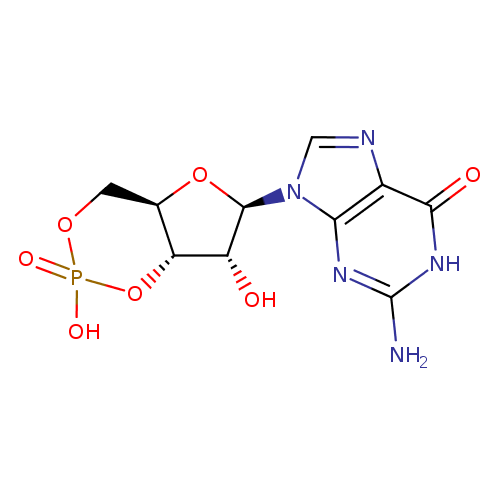 | ||||||||||||||||||||||||||||||||||||||||||||||||||||||||||||||||
| Synonyms |
| ||||||||||||||||||||||||||||||||||||||||||||||||||||||||||||||||
| Chemical Formula | C10H12N5O7P | ||||||||||||||||||||||||||||||||||||||||||||||||||||||||||||||||
| Average Molecular Weight | 345.2053 | ||||||||||||||||||||||||||||||||||||||||||||||||||||||||||||||||
| Monoisotopic Molecular Weight | 345.047434275 | ||||||||||||||||||||||||||||||||||||||||||||||||||||||||||||||||
| IUPAC Name | 9-[(4aR,6R,7R,7aS)-2,7-dihydroxy-2-oxo-hexahydro-2λ⁵-furo[3,2-d][1,3,2]dioxaphosphinin-6-yl]-2-amino-6,9-dihydro-1H-purin-6-one | ||||||||||||||||||||||||||||||||||||||||||||||||||||||||||||||||
| Traditional Name | cyclic-GMP | ||||||||||||||||||||||||||||||||||||||||||||||||||||||||||||||||
| CAS Registry Number | 7665-99-8 | ||||||||||||||||||||||||||||||||||||||||||||||||||||||||||||||||
| SMILES | NC1=NC2=C(N=CN2[C@@H]2O[C@@H]3COP(O)(=O)O[C@H]3[C@H]2O)C(=O)N1 | ||||||||||||||||||||||||||||||||||||||||||||||||||||||||||||||||
| InChI Identifier | InChI=1S/C10H12N5O7P/c11-10-13-7-4(8(17)14-10)12-2-15(7)9-5(16)6-3(21-9)1-20-23(18,19)22-6/h2-3,5-6,9,16H,1H2,(H,18,19)(H3,11,13,14,17)/t3-,5-,6-,9-/m1/s1 | ||||||||||||||||||||||||||||||||||||||||||||||||||||||||||||||||
| InChI Key | ZOOGRGPOEVQQDX-UUOKFMHZSA-N | ||||||||||||||||||||||||||||||||||||||||||||||||||||||||||||||||
| Chemical Taxonomy | |||||||||||||||||||||||||||||||||||||||||||||||||||||||||||||||||
| Description | belongs to the class of organic compounds known as 3',5'-cyclic purine nucleotides. These are purine nucleotides in which the oxygen atoms linked to the C3 and C5 carbon atoms of the ribose moiety are both bonded the same phosphorus atom of the phosphate group. | ||||||||||||||||||||||||||||||||||||||||||||||||||||||||||||||||
| Kingdom | Organic compounds | ||||||||||||||||||||||||||||||||||||||||||||||||||||||||||||||||
| Super Class | Nucleosides, nucleotides, and analogues | ||||||||||||||||||||||||||||||||||||||||||||||||||||||||||||||||
| Class | Purine nucleotides | ||||||||||||||||||||||||||||||||||||||||||||||||||||||||||||||||
| Sub Class | Cyclic purine nucleotides | ||||||||||||||||||||||||||||||||||||||||||||||||||||||||||||||||
| Direct Parent | 3',5'-cyclic purine nucleotides | ||||||||||||||||||||||||||||||||||||||||||||||||||||||||||||||||
| Alternative Parents |
| ||||||||||||||||||||||||||||||||||||||||||||||||||||||||||||||||
| Substituents |
| ||||||||||||||||||||||||||||||||||||||||||||||||||||||||||||||||
| Molecular Framework | Aromatic heteropolycyclic compounds | ||||||||||||||||||||||||||||||||||||||||||||||||||||||||||||||||
| External Descriptors |
| ||||||||||||||||||||||||||||||||||||||||||||||||||||||||||||||||
| Ontology | |||||||||||||||||||||||||||||||||||||||||||||||||||||||||||||||||
| Status | Detected but not Quantified | ||||||||||||||||||||||||||||||||||||||||||||||||||||||||||||||||
| Origin |
| ||||||||||||||||||||||||||||||||||||||||||||||||||||||||||||||||
| Biofunction | Not Available | ||||||||||||||||||||||||||||||||||||||||||||||||||||||||||||||||
| Application | Not Available | ||||||||||||||||||||||||||||||||||||||||||||||||||||||||||||||||
| Cellular locations |
| ||||||||||||||||||||||||||||||||||||||||||||||||||||||||||||||||
| Physical Properties | |||||||||||||||||||||||||||||||||||||||||||||||||||||||||||||||||
| State | Solid | ||||||||||||||||||||||||||||||||||||||||||||||||||||||||||||||||
| Experimental Properties |
| ||||||||||||||||||||||||||||||||||||||||||||||||||||||||||||||||
| Predicted Properties |
| ||||||||||||||||||||||||||||||||||||||||||||||||||||||||||||||||
| Spectra | |||||||||||||||||||||||||||||||||||||||||||||||||||||||||||||||||
| Spectra | |||||||||||||||||||||||||||||||||||||||||||||||||||||||||||||||||
| Biological Properties | |||||||||||||||||||||||||||||||||||||||||||||||||||||||||||||||||
| Cellular Locations |
| ||||||||||||||||||||||||||||||||||||||||||||||||||||||||||||||||
| Biospecimen Locations |
| ||||||||||||||||||||||||||||||||||||||||||||||||||||||||||||||||
| Pathways |
| ||||||||||||||||||||||||||||||||||||||||||||||||||||||||||||||||
| Normal Concentrations | |||||||||||||||||||||||||||||||||||||||||||||||||||||||||||||||||
| |||||||||||||||||||||||||||||||||||||||||||||||||||||||||||||||||
| Abnormal Concentrations | |||||||||||||||||||||||||||||||||||||||||||||||||||||||||||||||||
| Not Available | |||||||||||||||||||||||||||||||||||||||||||||||||||||||||||||||||
| External Links | |||||||||||||||||||||||||||||||||||||||||||||||||||||||||||||||||
| HMDB ID | HMDB0001314 | ||||||||||||||||||||||||||||||||||||||||||||||||||||||||||||||||
| DrugBank ID | DB02315 | ||||||||||||||||||||||||||||||||||||||||||||||||||||||||||||||||
| Phenol Explorer Compound ID | Not Available | ||||||||||||||||||||||||||||||||||||||||||||||||||||||||||||||||
| FooDB ID | FDB030764 | ||||||||||||||||||||||||||||||||||||||||||||||||||||||||||||||||
| KNApSAcK ID | C00019673 | ||||||||||||||||||||||||||||||||||||||||||||||||||||||||||||||||
| Chemspider ID | 22734 | ||||||||||||||||||||||||||||||||||||||||||||||||||||||||||||||||
| KEGG Compound ID | C00942 | ||||||||||||||||||||||||||||||||||||||||||||||||||||||||||||||||
| BioCyc ID | Not Available | ||||||||||||||||||||||||||||||||||||||||||||||||||||||||||||||||
| BiGG ID | 1485267 | ||||||||||||||||||||||||||||||||||||||||||||||||||||||||||||||||
| Wikipedia Link | Cyclic guanosine monophosphate | ||||||||||||||||||||||||||||||||||||||||||||||||||||||||||||||||
| METLIN ID | 6152 | ||||||||||||||||||||||||||||||||||||||||||||||||||||||||||||||||
| PubChem Compound | 24316 | ||||||||||||||||||||||||||||||||||||||||||||||||||||||||||||||||
| PDB ID | Not Available | ||||||||||||||||||||||||||||||||||||||||||||||||||||||||||||||||
| ChEBI ID | 16356 | ||||||||||||||||||||||||||||||||||||||||||||||||||||||||||||||||
| References | |||||||||||||||||||||||||||||||||||||||||||||||||||||||||||||||||
| Synthesis Reference | Sekhar, Konjeti R.; Grondin, Pascal; Francis, Sharron H.; Corbin, Jackie D. Design and synthesis of xanthines and cyclic GMP analogs as potent inhibitors of PDE5. Phosphodiesterase Inhibitors (1996), 135-146. | ||||||||||||||||||||||||||||||||||||||||||||||||||||||||||||||||
| Material Safety Data Sheet (MSDS) | Not Available | ||||||||||||||||||||||||||||||||||||||||||||||||||||||||||||||||
| General References | Not Available | ||||||||||||||||||||||||||||||||||||||||||||||||||||||||||||||||
Enzymes
- General function:
- Involved in 3',5'-cyclic-GMP phosphodiesterase activity
- Specific function:
- As cone-specific cGMP phosphodiesterase, it plays an essential role in light detection and cone phototransduction by rapidly decreasing intracellular levels of cGMP.
- Gene Name:
- PDE6C
- Uniprot ID:
- P16586
- Molecular weight:
- 98798.0
- General function:
- Involved in 3',5'-cyclic-GMP phosphodiesterase activity
- Specific function:
- This protein participates in processes of transmission and amplification of the visual signal.
- Gene Name:
- PDE6A
- Uniprot ID:
- P11541
- Molecular weight:
- 99341.0
- General function:
- Involved in 3',5'-cyclic-GMP phosphodiesterase activity
- Specific function:
- This protein participates in processes of transmission and amplification of the visual signal. Necessary for the formation of a functional phosphodiesterase holoenzyme.
- Gene Name:
- PDE6B
- Uniprot ID:
- P23439
- Molecular weight:
- 98331.0
- General function:
- Involved in 3',5'-cyclic-nucleotide phosphodiesterase a
- Specific function:
- Participates in processes of transmission and amplification of the visual signal. cGMP-PDEs are the effector molecules in G-protein-mediated phototransduction in vertebrate rods and cones.
- Gene Name:
- PDE6H
- Uniprot ID:
- P22571
- Molecular weight:
- 9102.0
- General function:
- Involved in 3',5'-cyclic-GMP phosphodiesterase activity
- Specific function:
- Plays a role in signal transduction by regulating the intracellular concentration of cyclic nucleotides. This phosphodiesterase catalyzes the specific hydrolysis of cGMP to 5'-GMP (PubMed:8530505). Specifically regulates nitric-oxide-generated cGMP (By similarity).
- Gene Name:
- PDE5A
- Uniprot ID:
- Q28156
- Molecular weight:
- 98627.0
- General function:
- Involved in 3',5'-cyclic-nucleotide phosphodiesterase a
- Specific function:
- Participates in processes of transmission and amplification of the visual signal. cGMP-PDEs are the effector molecules in G-protein-mediated phototransduction in vertebrate rods and cones.
- Gene Name:
- PDE6G
- Uniprot ID:
- P04972
- Molecular weight:
- 9669.0
- General function:
- Signal transduction mechanisms
- Specific function:
- Receptor for the C-type natriuretic peptide NPPC/CNP hormone. Has guanylate cyclase activity upon binding of its ligand. May play a role in the regulation of skeletal growth.
- Gene Name:
- NPR2
- Uniprot ID:
- P46197
- Molecular weight:
- 117146.0
- General function:
- Signal transduction mechanisms
- Specific function:
- Responsible for the synthesis of cyclic GMP (cGMP) in rods and cones of photoreceptors (PubMed:9571173, PubMed:9175772). Plays an essential role in phototransduction, by mediating cGMP replenishment (PubMed:9571173, PubMed:9175772). May also participate in the trafficking of membrane-asociated proteins to the photoreceptor outer segment membrane (By similarity).
- Gene Name:
- GUCY2F
- Uniprot ID:
- O02740
- Molecular weight:
- 124262.0
- General function:
- Signal transduction mechanisms
- Specific function:
- Not Available
- Gene Name:
- Not Available
- Uniprot ID:
- O77690
- Molecular weight:
- 122710.0
- General function:
- Signal transduction mechanisms
- Specific function:
- Catalyzes the synthesis of cyclic GMP (cGMP) in rods and cones of photoreceptors. Plays an essential role in phototransduction, by mediating cGMP replenishment (PubMed:8102054). May also participate in the trafficking of membrane-asociated proteins to the photoreceptor outer segment membrane (By similarity).
- Gene Name:
- GUCY2D
- Uniprot ID:
- P55203
- Molecular weight:
- 120369.0
- General function:
- Involved in ATP binding
- Specific function:
- Serine/threonine protein kinase that acts as key mediator of the nitric oxide (NO)/cGMP signaling pathway. GMP binding activates PRKG1, which phosphorylates serines and threonines on many cellular proteins. Numerous protein targets for PRKG1 phosphorylation are implicated in modulating cellular calcium, but the contribution of each of these targets may vary substantially among cell types. Proteins that are phosphorylated by PRKG1 regulate platelet activation and adhesion, smooth muscle contraction, cardiac function, gene expression, feedback of the NO-signaling pathway, and other processes involved in several aspects of the CNS like axon guidance, hippocampal and cerebellar learning, circadian rhythm and nociception. Smooth muscle relaxation is mediated through lowering of intracellular free calcium, by desensitization of contractile proteins to calcium, and by decrease in the contractile state of smooth muscle or in platelet activation. Regulates intracellular calcium levels via several pathways: phosphorylates MRVI1/IRAG and inhibits IP3-induced Ca(2+) release from intracellular stores, phosphorylation of KCNMA1 (BKCa) channels decreases intracellular Ca(2+) levels, which leads to increased opening of this channel. PRKG1 phosphorylates the canonical transient receptor potential channel (TRPC) family which inactivates the associated inward calcium current. Another mode of action of NO/cGMP/PKGI signaling involves PKGI-mediated inactivation of the Ras homolog gene family member A (RhoA). Phosphorylation of RHOA by PRKG1 blocks the action of this protein in myriad processes: regulation of RHOA translocation; decreasing contraction; controlling vesicle trafficking, reduction of myosin light chain phosphorylation resulting in vasorelaxation. Activation of PRKG1 by NO signaling alters also gene expression in a number of tissues. In smooth muscle cells, increased cGMP and PRKG1 activity influence expression of smooth muscle-specific contractile proteins, levels of proteins in the NO/cGMP signaling pathway, down-regulation of the matrix proteins osteopontin and thrombospondin-1 to limit smooth muscle cell migration and phenotype. Regulates vasodilator-stimulated phosphoprotein (VASP) functions in platelets and smooth muscle (By similarity).
- Gene Name:
- PRKG1
- Uniprot ID:
- P00516
- Molecular weight:
- 76419.0
- General function:
- Involved in 3',5'-cyclic-nucleotide phosphodiesterase a
- Specific function:
- Cyclic nucleotide phosphodiesterase with a dual-specificity for the second messengers cAMP and cGMP, which are key regulators of many important physiological processes.
- Gene Name:
- PDE2A
- Uniprot ID:
- P14099
- Molecular weight:
- 103228.0
- General function:
- Involved in calcium ion binding
- Specific function:
- Intracellular channel that mediates calcium release from the endoplasmic reticulum following stimulation by inositol 1,4,5-trisphosphate. Involved in the regulation of epithelial secretion of electrolytes and fluid through the interaction with AHCYL1 Plays a role in ER stress-induced apoptosis. Cytoplasmic calcium released from the ER triggers apoptosis by the activation of CaM kinase II, eventually leading to the activation of downstream apoptosis pathways.
- Gene Name:
- ITPR1
- Uniprot ID:
- Q9TU34
- Molecular weight:
- 308318.0
- General function:
- Translation, ribosomal structure and biogenesis
- Specific function:
- Subunit of the rod cyclic GMP-gated cation channel, which is involved in the final stage of the phototransduction pathway. When light hits rod photoreceptors, cGMP concentrations decrease causing rapid closure of CNGA1/CNGB1 channels and, therefore, hyperpolarization of the membrane potential.
- Gene Name:
- CNGA1
- Uniprot ID:
- Q00194
- Molecular weight:
- 79602.0
- General function:
- Signal transduction mechanisms
- Specific function:
- Visual signal transduction is mediated by a G-protein coupled cascade using cGMP as second messenger. This protein can be activated by cyclic GMP which leads to an opening of the cation channel and thereby causing a depolarization of cone photoreceptors. Essential for the generation of light-evoked electrical responses in the red-, green- and blue sensitive cones Induced a flickering channel gating, weakened the outward rectification in the presence of extracellular calcium, increased sensitivity for L-cis diltiazem and enhanced the cAMP efficacy of the channel when coexpressed with CNGB3 (By similarity). Could be responsible for cGMP-induced calcium entry in cells other than sensory cells. Might be involved in chemotaxis of sperm.
- Gene Name:
- CNGA3
- Uniprot ID:
- Q29441
- Molecular weight:
- 81132.0